
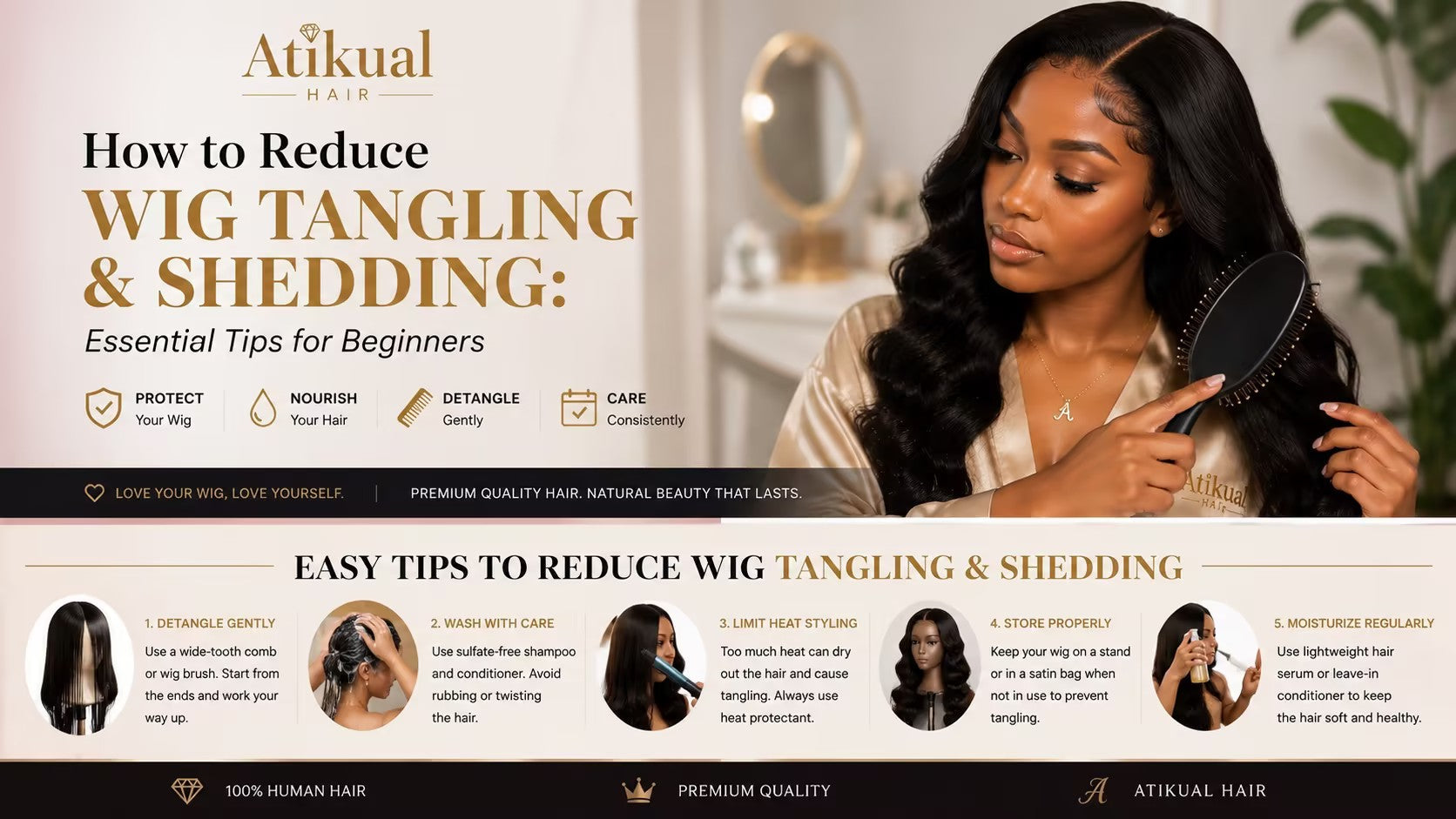
How to Reduce Wig Tangling & Shedding: Essential Tips
Wigs are a fantastic way to transform your look, boost confidence, and experiment with different styles. But one common challenge many beginners face is tangling and shedding.
With the right care routine, you can keep your wig looking fresh, soft, and natural for longer. Atikual Hair will walk yo u through the best practices to minimize tangles and prevent hair from falling out.

1. Brush Your Wig Regularly
Brushing is the foundation of wig maintenance. It helps keep hair smooth, prevents knots from forming, and reduces shedding over time.
- Before Wearing: Gently brush your wig to detangle it before putting it on. This prevents friction between your natural hair and the wig, which can cause breakage.
- After Wearing: Brush the wig after each use to remove dirt, dust, or small tangles that may have formed during wear.
Atikual Tip: Use a wide-tooth comb or a wig brush to avoid pulling the hair. For curly wigs, always detangle from the ends first and gradually work up to the roots.
2. Avoid Sleeping, Swimming, or Showering With Your Wig
Wigs are delicate, and exposing them to water or friction can lead to tangling and shedding.
- Sleeping: When you sleep with a wig on, friction against your pillow can cause knots and breakage. Remove your wig and store it on a wig stand or mannequin head.
- Swimming or Showering: Water, especially chlorinated or salty water, can damage synthetic fibers and loosen the wefts on human hair wigs. Always remove your wig before swimming or washing your hair.
Atikual Tip: If you need to protect your natural hair overnight, consider a silk or satin bonnet while storing your wig separately.
3. Moisturize and Condition Human Hair Wigs
Human hair wigs need a little extra TLC to stay soft and manageable. Dry ends are prone to tangling and shedding.
- Light Hair Oil: Apply a small amount of light, non-greasy hair oil to the ends of your wig. This helps keep the hair smooth, shiny, and less likely to knot.
- Regular Conditioning: Use wig-friendly conditioners or leave-in sprays designed for human hair wigs to maintain moisture and softness.
Atikual Tip: Avoid applying oil near the roots or lace area, as this can loosen knots and reduce the lifespan of your wig.
4. Avoid Heavy Hair Products
While styling products can enhance your wig, heavy gels, sprays, or mousses can weigh it down and cause tangling.
- Heavy products can make strands sticky and attract dust, which leads to matting.
- They can also weaken the fibers, causing premature shedding.
Atikual Tip: Stick to lightweight, wig-friendly sprays or mousse and apply sparingly. For synthetic wigs, heatless styling sprays are ideal.
5. Additional Tips to Extend Wig Life
- Store Properly: Keep your wig on a stand or mannequin head when not in use to maintain shape and avoid tangling.
- Wash Carefully: Follow the manufacturer’s washing instructions. Over-washing can lead to dryness, while improper drying can cause knots.
- Handle Gently: Always hold the wig by the nape or roots when styling, not by the ends, to prevent shedding.
Conclusion
Tangling and shedding don’t have to be a permanent problem. By incorporating simple daily habits—like brushing gently, moisturizing ends, avoiding heavy products, and proper storage—you can keep your wig looking natural and feeling soft for months.
With the right care routine, your wig can remain your most versatile accessory, giving you confidence and style without the frustration of tangles or excess shedding.
Wigs are a fantastic way to transform your look, boost confidence, and experiment with different styles. But one common challenge many beginners face is tangling and shedding. With the right care routine, you can keep your wig looking fresh, soft, and natural for longer. This guide will walk you through the best practices to minimize tangles and prevent hair from falling out.
1. Brush Your Wig Regularly
Brushing is the foundation of wig maintenance. It helps keep hair smooth, prevents knots from forming, and reduces shedding over time.
- Before Wearing: Gently brush your wig to detangle it before putting it on. This prevents friction between your natural hair and the wig, which can cause breakage.
- After Wearing: Brush the wig after each use to remove dirt, dust, or small tangles that may have formed during wear.
Pro Tip: Use a wide-tooth comb or a wig brush to avoid pulling the hair. For curly wigs, always detangle from the ends first and gradually work up to the roots.
2. Avoid Sleeping, Swimming, or Showering With Your Wig
Wigs are delicate, and exposing them to water or friction can lead to tangling and shedding.
- Sleeping: When you sleep with a wig on, friction against your pillow can cause knots and breakage. Remove your wig and store it on a wig stand or mannequin head.
- Swimming or Showering: Water, especially chlorinated or salty water, can damage synthetic fibers and loosen the wefts on human hair wigs. Always remove your wig before swimming or washing your hair.
Pro Tip: If you need to protect your natural hair overnight, consider a silk or satin bonnet while storing your wig separately.
3. Moisturize and Condition Human Hair Wigs
Human hair wigs need a little extra TLC to stay soft and manageable. Dry ends are prone to tangling and shedding.
- Light Hair Oil: Apply a small amount of light, non-greasy hair oil to the ends of your wig. This helps keep the hair smooth, shiny, and less likely to knot.
- Regular Conditioning: Use wig-friendly conditioners or leave-in sprays designed for human hair wigs to maintain moisture and softness.
Pro Tip: Avoid applying oil near the roots or lace area, as this can loosen knots and reduce the lifespan of your wig.
4. Avoid Heavy Hair Products
While styling products can enhance your wig, heavy gels, sprays, or mousses can weigh it down and cause tangling.
- Heavy products can make strands sticky and attract dust, which leads to matting.
- They can also weaken the fibers, causing premature shedding.
Pro Tip: Stick to lightweight, wig-friendly sprays or mousse and apply sparingly. For synthetic wigs, heatless styling sprays are ideal.
5. Additional Tips to Extend Wig Life
- Store Properly: Keep your wig on a stand or mannequin head when not in use to maintain shape and avoid tangling.
- Wash Carefully: Follow the manufacturer’s washing instructions. Over-washing can lead to dryness, while improper drying can cause knots.
- Handle Gently: Always hold the wig by the nape or roots when styling, not by the ends, to prevent shedding.
Conclusion
Tangling and shedding don’t have to be a permanent problem. By incorporating simple daily habits—like brushing gently, moisturizing ends, avoiding heavy products, and proper storage—you can keep your wig looking natural and feeling soft for months.
With the right care routine, your wig can remain your most versatile accessory, giving you confidence and style without the frustration of tangles or excess shedding.


Leave a comment
This site is protected by hCaptcha and the hCaptcha Privacy Policy and Terms of Service apply.