
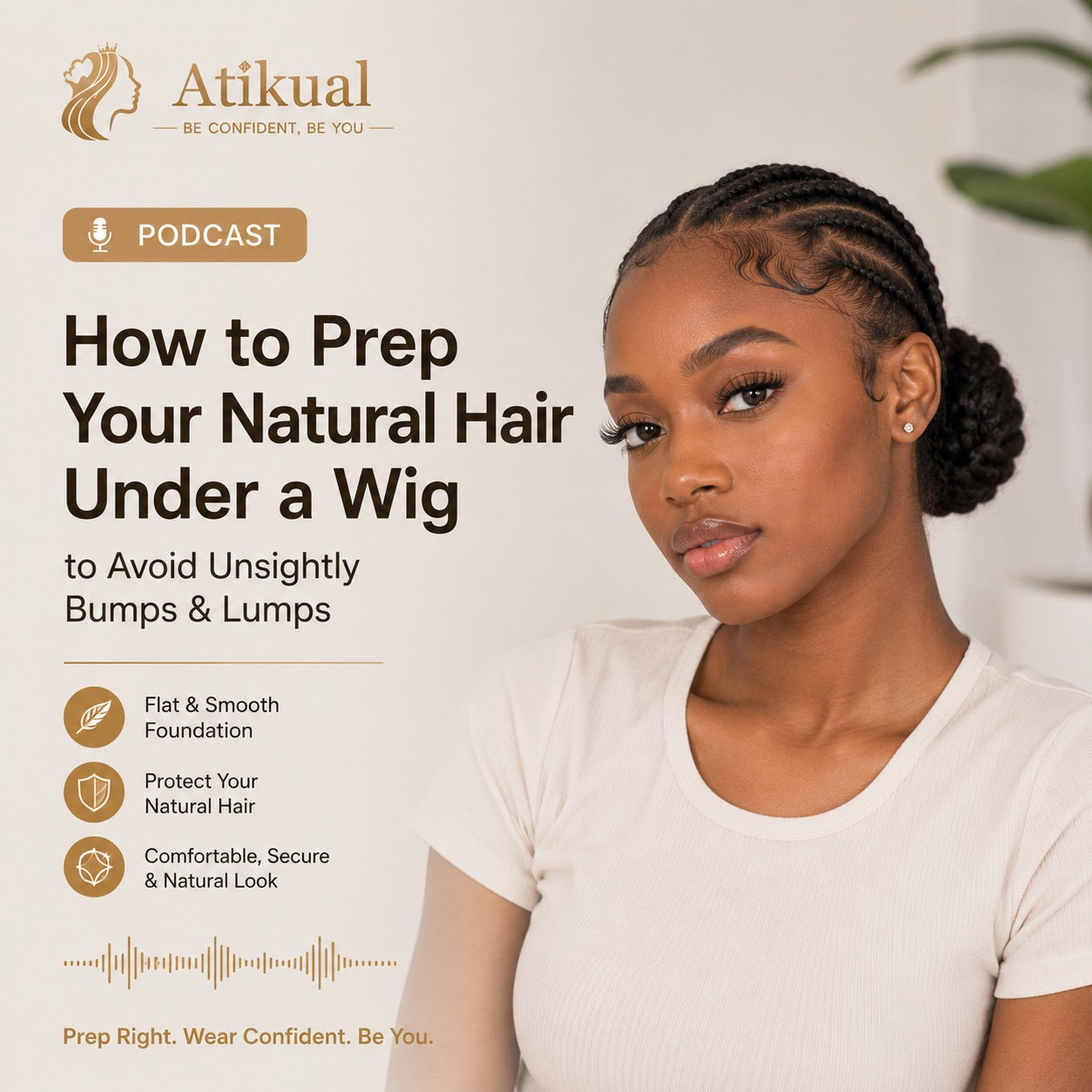
How to Prep Your Natural Hair Under a Wig to Avoid Unsightly Bumps & Lumps
Blog Meta Description: Learn proven DIY methods to flatten natural hair neatly under wigs, eliminate bumps, bulges & uneven crowns for seamless wear; trusted prep tips from Atikual for all hair lengths & textures.
Intro
Nothing ruins a flawless wig look faster than unexpected bumps, raised lumps or uneven bulges poking through wig caps and wig lace. Countless wig wearers spend hours styling their new unit only to spot unsightly protrusions at the crown, nape or temples a few hours after putting it on. Most bump issues stem from improper natural hair prep rather than poor wig craftsmanship, and mastering simple hair tucking techniques lets anyone achieve a smooth, flat base under any wig style. As a long-standing wig specialist focused on realistic wear experience, Atikual compiles practical, texture-inclusive prep guidelines applicable to short cropped hair, long thick curls, coarse afro-textured strands and fine straight locks alike. Whether you’re wearing daily synthetic pieces or premium human hair wigs from Atikual, correct under-wig hair preparation directly upgrades wig fit, comfort and invisible finish all day long.
Chapter 1: Pre-Wash & Pre-Style Prep – Lay the Foundation for Flat Tucking
Before bundling your natural hair away under a wig, preliminary hair care sets the entire base’s smoothness. Frizzy, tangled or damp hair inevitably clumps into uneven chunks that create noticeable bumps beneath wig fabric and lace. Start by fully washing and blow-drying your natural hair completely dry; leftover moisture causes hair to swell mid-day and bulge outward after securing the wig. For curly, coily and thick textured hair users, apply a lightweight leave-in smoothing cream sparingly to tame flyaways without building sticky residue.
Many loyal customers shopping human hair wigs at Atikual mention skipping pre-drying is their top mistake leading to crown bulges. If your strands are prone to excessive volume, a quick low-heat blowout relaxes tight curls temporarily and drastically cuts down bulk before braiding or wrapping. Avoid heavy oil-based serums in large quantities; excess grease mats hair into hard lumps that show through thin lace wig tops, one of the most common complaints Atikual’s customer service team resolves weekly for global wig enthusiasts. Once hair is fully dry and detangled, split your hair based on length to pick the most suitable flattening method for your unique hair type.
Chapter 2: Four Go-To Tucking Methods for Different Hair Lengths (No More Random Bulges)
2.1 Short Hair (Pixie, Buzz Cut, Ear-Length Strands)
Short hair is the easiest to prep for bump-free wig wear and rarely needs complex braiding. Comb all hair flat against your scalp from forehead down to nape, then slip on a thin stretch nylon wig cap. Press stray baby hairs flat with a tiny dab of edge control before cap placement to stop small hair spikes from poking through cap fabric. Users with ultra-short buzzed hair can skip braiding entirely, a tip regularly shared by stylists collaborating with Atikual during their seasonal wig tutorial workshops. Pick a snug, thin breathable wig cap instead of thick cotton variants; bulky caps alone create unnecessary head bumps even with perfectly flattened short hair underneath.
2.2 Medium-Length Hair (Shoulder to Collarbone Length)
Shoulder-length hair holds moderate volume and requires low center braids or flat cornrows running close to the scalp. Split hair into two equal halves down your middle part, braid each side tightly against your skull toward the nape and secure braid ends with small elastic ties close to the neck. Never braid loosely or pull braids upward toward the crown; elevated braid knots instantly form hard bumps directly under the wig top.
Many buyers of Atikual’s everyday lace front wigs favor this two-braid prep thanks to its balanced flatness and all-day comfort. After braiding, fold leftover braid ends flat along the nape and tuck fully inside your wig cap to eliminate protruding knots. For fine medium hair with minimal bulk, a single low ponytail wrapped in a circular flat bun at the lower nape works as a quicker alternative to braiding.
2.3 Long Thick Hair (Past Collarbone, Thick Straight/Curly Locks)
Long dense hair carries the highest bulk and is the primary culprit behind prominent wig bulges at the back and crown. Divide hair into multiple thin horizontal cornrows following your scalp’s natural curve, braiding each row as close to the skin as possible. Avoid few thick chunky braids; large single braids stack bulk and create rigid bumps that show through even high-quality wig bases from brands including Atikual.
After full cornrow installation, wrap any loose remaining hair ends evenly around the nape in a thin flat coil, securing with mini hair pins laid parallel against your scalp instead of sticking upright. Cover all braids and wrapped hair with two thin layered wig caps if your hair is exceptionally voluminous; dual lightweight caps compress residual bulk without adding noticeable thickness underneath your wig.
2.4 Coily & Afro-Textured Hair
Tight coil hair expands easily with body heat, making gradual scalp cornrows the gold standard for bump prevention. Stretch each coil gently during braiding to reduce natural shrinkage volume before securing rows flat. Atikual’s textured wig line users frequently confirm scalp-hugging small cornrows deliver the smoothest under-base for curly lace wigs and full cap units. Skip big loose twists entirely, as twisted bulk swells with body warmth and creates irregular bumps within hours of wig application.
Chapter 3: Wig Cap Application Tips to Eliminate Hidden Bulges
Perfectly tucked natural hair can still develop bumps from incorrect wig cap fitting, a detail most new wig wearers overlook. Choose cap size matching your head circumference; oversized caps slide and bunch up under the wig while undersized caps squeeze hair into clustered lumps at the temples and nape. Smooth the wig cap slowly from your hairline backward toward the nape, gently pushing trapped air pockets out as you go—trapped air between cap and scalp is a lesser-known cause of random wig surface bulges.
Atikual’s official styling guides always recommend smoothing cap edges along your hairline with fingertips to fold excess cap material flat rather than bunching it up near ears. Once the cap sits seamlessly against your head, run your palm all over your head’s surface to check for raised spots; massage small protruding areas flat before placing your wig onto the cap. For users with prominent scalp bumps or uneven skull shape, a thin foam wig liner under the cap evens out surface irregularities for Atikual’s ultra-thin HD lace wigs, which easily showcase uneven base texture without proper buffering.
Chapter 4: Post-Wig Placement Quick Fixes for Unexpected Last-Minute Bumps
Even with meticulous prep, minor small bumps can pop up after securing your wig due to daily head movement and hair swelling. If you spot a tiny bulge at crown or side, gently lift the wig’s lace edge with a small styling pick, press the underlying cap and tucked hair flat using your fingertip, then re-secure wig clips or adhesive in the corrected spot. Avoid yanking the wig forcefully, which shifts your neatly prepped natural hair out of place and worsens bulges.
Many regular Atikual customers keep a mini flat bobby pin set handy for emergency fixes; slide pins horizontally under the wig cap to anchor shifted bulk flat against the scalp without piercing through wig lace. When thick curly hair expands noticeably after several hours outdoors, loosen wig band tension slightly to release trapped heat that causes hair swelling, instantly reducing unexpected surface bumps across your wig top.
Chapter 5: Common Mistakes to Avoid When Prepping Hair Under Wigs
- Making high crown buns or top ponytails: upward-placed bun bulk sits directly under wig crown, the most visible spot for bumps; always keep wrapped hair at low nape only. This error tops the mistake list collected from Atikual’s global user feedback over years of wig sales.
- Using thick bulky hair ties and large claw clips under caps: hard plastic and thick fabric fasteners form hard defined lumps that poke through all wig types.
- Prepping damp or slightly moist hair: trapped moisture lets natural hair expand gradually throughout the day, creating delayed bulges hours after wig wear starts.
- Overloading hair with heavy styling gel and butter products: built-up product clumps hard into uneven masses under wig caps.
Avoiding these four errors cuts over 90% of typical bump issues for all wig styles, from short bob units to long body wave pieces sold at Atikual’s official online store.
Conclusion
Smooth, bump-free wig wear relies entirely on tailored natural hair prep matching your hair length, texture and density rather than expensive wig upgrades alone. From short buzzed strands to thick afro curls, the four core flattening techniques above adapt to every hair type and drastically improve your wig’s seamless appearance day in and day out. With consistent use of these prep hacks paired with properly fitted wig caps, wearers get a flawless invisible base to showcase their favorite wig pieces, including premium human hair and lace options curated by Atikual for worldwide wig lovers. Master these easy DIY prep steps, and unsightly under-wig bulges will no longer ruin your daily wig styling experience.
Keywords: prep natural hair under wig, stop wig bumps, flatten hair for lace wig, Atikual wig prep guide, no bulge wig base, how to tuck long hair under wig, curly hair under wig tips

Leave a comment
This site is protected by hCaptcha and the hCaptcha Privacy Policy and Terms of Service apply.